Lasercut: A Playful Font for Whimsical Design
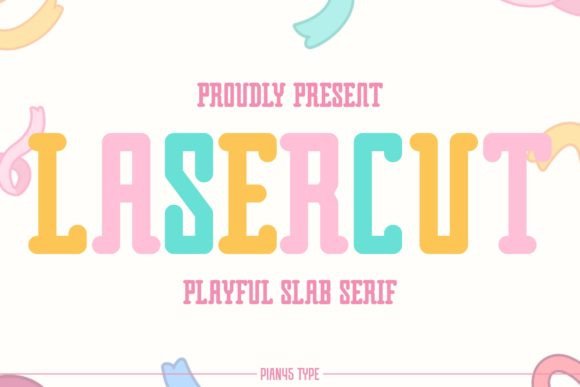
Fonts play a crucial role in visual communication, influencing how messages are perceived and interpreted. Among the many typefaces available, Lasercut stands out as a unique and expressive option that adds a sense of fun and creativity to any design. This whimsical slab serif font is more than just an aesthetic choice—it's a tool that can elevate the tone and character of a project. Whether used in digital or print media, Lasercut brings a lighthearted energy that resonates with a wide range of audiences.
The design of Lasercut is rooted in simplicity and charm. Its rounded edges and playful letterforms create a friendly and approachable vibe, making it ideal for projects that aim to convey joy, nostalgia, or a sense of childlike wonder. Unlike more rigid or formal fonts, Lasercut embraces a casual and spontaneous feel, which makes it particularly well-suited for creative industries such as graphic design, branding, and content creation.
Applications of Lasercut in Modern Design
One of the most appealing aspects of Lasercut is its versatility across different mediums. It works exceptionally well in both digital and physical formats, allowing designers to maintain consistency while adapting to various platforms. For instance, when used in web design, Lasercut can be applied to headings, banners, or call-to-action buttons to draw attention and add a touch of personality. Its legibility at larger sizes ensures that it remains effective without compromising readability.
In print, Lasercut shines in projects like posters, greeting cards, and merchandise. Its bold yet soft appearance makes it a popular choice for promotional materials that aim to stand out. For example, a local bakery might use Lasercut on a banner to announce a special event, creating a visually engaging and inviting message. Similarly, a children’s book publisher could incorporate the font into cover designs to reflect the playful nature of the content.
Advantages of Using Lasercut
Designers often choose Lasercut for its ability to convey emotion and mood. The font’s playful characteristics make it an excellent choice for projects targeting younger demographics or those seeking to express a sense of humor. Its warm and inviting style can also help create a connection with the audience, making the content more relatable and memorable.
Another advantage of Lasercut is its compatibility with other design elements. It pairs well with both modern and traditional aesthetics, allowing for flexible combinations. For example, when paired with minimalist layouts, Lasercut can add a subtle pop of personality without overwhelming the composition. On the other hand, when used alongside more intricate illustrations, it can complement the overall visual narrative.
Considerations When Using Lasercut
While Lasercut is highly versatile, it’s important to consider the context in which it’s used. Due to its distinct style, it may not be suitable for all types of projects. Professional or formal environments, such as corporate reports or legal documents, may require more conventional typefaces that convey authority and seriousness. In these cases, Lasercut could appear too informal or unprofessional.
Additionally, designers should be mindful of the scale and placement of Lasercut in their work. While it excels at larger sizes, using it in small text can reduce legibility and compromise the overall effectiveness of the design. It’s also advisable to test the font across different devices and platforms to ensure consistent performance and appearance.
Real-World Examples of Lasercut in Action
Many businesses and creators have successfully incorporated Lasercut into their branding strategies. For example, a boutique clothing line might use the font on product tags and packaging to reinforce a fun and stylish image. This approach not only enhances the visual appeal but also strengthens brand identity by aligning the typography with the overall aesthetic.
Another common application is in social media content. Influencers and content creators often use Lasercut in captions, story overlays, or profile headers to add a personal and engaging touch. The font’s playful nature helps capture attention and encourages interaction, making it a valuable asset in online marketing efforts.
How to Incorporate Lasercut into Your Projects
For those interested in using Lasercut, the first step is to locate a reliable source for the font. Many design platforms offer access to a wide range of typefaces, including Lasercut, either through subscription services or one-time purchases. Once obtained, the font can be installed on a computer or integrated into design software such as Adobe Illustrator, Photoshop, or Canva.
When working with Lasercut, it’s helpful to experiment with different weights and styles to find the best fit for the project. Some versions of the font may include variations such as bold, light, or italic, each offering a slightly different visual effect. By testing these options, designers can achieve a more refined and tailored outcome.
Finally, it’s important to remember that typography is just one element of the overall design. Lasercut should be used in conjunction with other visual components, such as color schemes, images, and layout structures, to create a cohesive and impactful final product.